The future of ritual slaughter in the U.S.
‘Meatingplace’ contacted Joe M. Regenstein, professor in the Department of Food Science at Cornell University, to discuss recent issues and the future of ritual slaughter in the United States.
Here are three tips on engaging with this lucrative, untapped and potentially very loyal consumer base: focus on finance, fashion and food.
Ali Berlow Editor, ‘Edible Vineyard’
It was truly blessed meat. Over every animal held in arms and slaughtered, a prayer was said as the swift, sharp deed of taking life in sacrifice was made. There is no denying the gravity of these transforming moments when man, animal, prayer, blade and blood meet. [...]
The Arab Spring is opening a new frontier for brands, but American marketers may want to look a little closer to home. Ogilvy Noor’s Shelina Janmohamed reports that engaging America’s 7 million Muslims takes courage, but pays dividends.
Working as a news wire journalist, I was often spending upwards of 10 hours a day in the office or at conferences, interviews and meetings, barely able to make time for a lunch break. If I wasn’t working, my time was divided between house chores, errands, family and friends, and exercise. I was punctual with everything in my life, except that I was late five times a day.
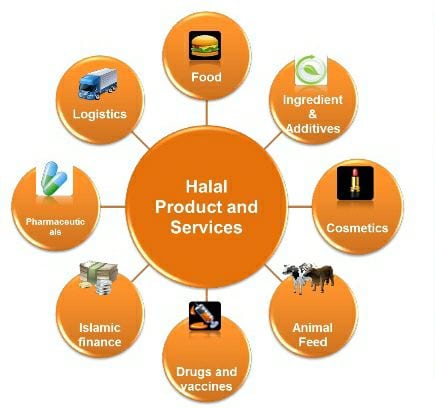
“Islamic Marketing” or “Islamic Branding” as it’s colloquially known is fast becoming one of the most hotly debated topics intoday’s marketing circles. ‘Halal’ is moving beyond the conventional good, wholesome and pure. It is extending to beauty, pharmaceutical and even tourism.
The MOML – “Muslim Meal” is just a meal “without pork and without Alcohol “(In the jargon Airline Caterer term it is called a “Non-Pork”-Meal). Everything else does not meet the Islamic dietary laws. It is also not the laid down claim that the meat would be Halal slaughtered or the ingredients are Halal-compliant.
Businesses are failing to make the most of one of the world’s fastest-growing markets, according to an international expert in Islamic marketing, Jon Wilson from the University of Greenwich. Islam-centric branding and marketing are essential for global companies, he argues, pointing out that Muslims make up a quarter of the world’s consumers.
A new study of consumer engagement finds that companies that aren’t making a difference—to the world and to consumers—aren’t going to be around much longer. Instead of just making your product incrementally better than the competitor, you need to create impact.
Three-quarters of Britons who become Muslim are female. Now a major new study has shed light on the difficulties they face in adjusting to their new life.
When it comes to the growing arena of marketing to Muslims, the big question that the marketing industry is grappling with is: can you really speak of such a thing as a single homogeneous Muslim consumer, regardless of where they are in the world?
Malaysia has raised the profile of Islamic finance, takaful and the halal industry, and, now, it must do the same to venture capital (VC). VC is an important emerging asset class that should contribute to the government’s objective of building a knowledge- based economy by 2020. There were several important takeaways from the recently concluded International Venture Capital Symposium 2011.
The recent decision by Saudi King Abdullah to allow women to run and vote in municipal elections and become members of the Shura Council, a parliament that acts as an advisory council to the King but has no legislative powers, has huge implications for the status of women in Saudi Arabia.
In August 2011 the Abu Dhabi Gallup Center released a report in which the key finding was that Muslim Americans are among the most integrated and successful citizens in the United States.
Demand for Islamic funds has risen in the past three to six months as the global economic slowdown prompted investors to seek alternative investments to help manage risk, according to Germain Birgen, Luxembourg-based global head of HSBC Amanah Securities. The unit will help set up more than 30 Sharia-compliant funds globally.